Herbier - nature recorded in color, texture, and light
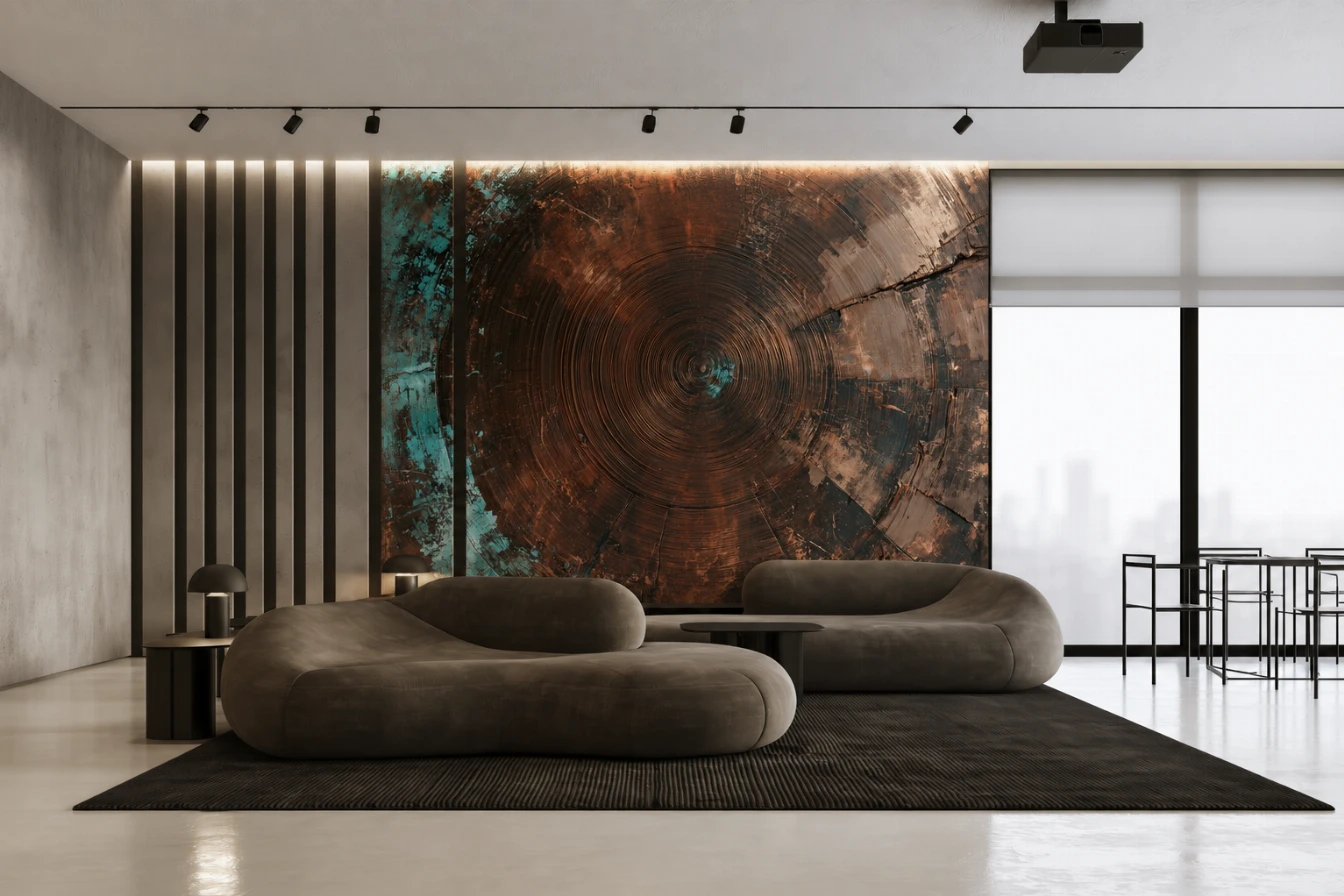
Herbier - nature captured in color, texture, and light
Not every nature-inspired wallpaper has to depict a garden, forest, or bouquet of flowers. In the Herbier collection, we look at nature from a much closer perspective - we are interested in fibers, dried plants, wood texture, discolorations, and traces left by time.
Herbier is a collection for those who like organic motifs but are looking for something more subtle than classic botanical wallpaper. Vegetation appears here in the form of shadows, imprints, and fragments of compositions, sometimes almost completely giving way to texture, light, and color.
The effect resembles more a page from an old herbarium, hand-dyed paper, or a piece of natural material than a traditional plant pattern.
What distinguishes the Herbier collection?
Above all, its subtlety.
In some designs, we immediately notice leaves or stems. In others, nature is merely a starting point for creating an abstract surface. The texture, shadow, or trace of the plant becomes more important than the shape itself.
Colors also play a significant role. The collection is dominated by earth tones: sepia, caramel, ochre, rust, deep browns, beiges, and muted greens. Black and copper accents also appear.
This palette fits well with wood, stone, and natural fabrics but can also create a very striking wall.
How is nature depicted in the individual patterns?
Each mural interprets it a little differently.
In Bractee, large leaves with soft, almost transparent shapes play the leading role. Sarment is much more delicate – its slender stems and grasses create a light rhythm on the wall.
Sepale evokes dried plant fragments stored between the pages of an old herbarium. A completely different atmosphere is created by Aigrette, where plant silhouettes emerge from a dark, deep background.
In Songe, light leaves resemble a print or photographic negative, while Tilleul looks as if successive layers of plants were hand-pressed onto paper.
Thus, the botanical motif in Herbier is not a repeating ornament. Sometimes it is very clear, other times it remains only a suggestion.
Is Herbier only about plants?
Definitely not.
One of the more interesting directions in the collection is patterns inspired by natural surfaces and processes.
Aulne creates characteristic rings that may remind one of a tree trunk cross-section, traces of applied paint, or a metal surface altered by time.
In Diaphane, the transitions between caramel, brown, and black become the focus. The composition may resemble light seen through a translucent material.
Tannin uses irregular discolorations and a patina effect, making the wall look almost like a surface subjected to natural aging.
There are also designs with a more landscape character. Rhizome builds a composition from horizontal layers of green, dark brown, black, and copper highlights, while Traverse may evoke a misty forest or a landscape seen through delicate fabric.
Herbier, therefore, does not tell a story only about plants. It tells about nature through earth colors, wood texture, fibers, light, pigment, and surface irregularity.
What to pair Herbier murals with?
The most natural direction is materials that have their own distinct texture.
Wood and veneer will emphasize the warm tones of the collection. Linen, wool, rattan, or weaves will complement its textile character well. Stone and ceramics can create an interesting contrast to the delicate plant forms.
For darker murals, it is also worth using black details, copper, or antique gold.
Herbier fits well in Japandi and boho interiors, but we do not limit this collection to one style. Abstract graphics can also suit modern apartments, lofts, or more artistic arrangements.
We can use them in the living room or bedroom, but equally well in the dining room, study, hallway, or large foyer. The collection also works in commercial spaces – including hotels, restaurants, receptions, and showrooms.
Can the Herbier mural be tailored to a specific wall?
Yes. REVE designs are prepared individually to the dimensions of the surface, so there is no need to adapt the wall to a ready-made repeating pattern.
We can work on framing, placement of key composition elements, motif scale, saturation, and color scheme.
This is especially important when there is a bed, sofa, door, or tall cabinetry on the wall. The main graphic element can be placed so that it remains visible even after furnishing the interior.
The mural does not have to cover the entire surface. Selected designs can be enclosed in the form of a circle or arc or used inside frames made of stucco. In this way, the graphic begins to serve as a large painting.
How to choose the substrate for Herbier graphics?
In this collection, the material can strongly influence the final effect.
The same design printed on a surface resembling canvas, concrete, fine sand, or geometric texture will be perceived differently. Texture changes how we see light, darker parts of the graphic, and subtle color transitions.
Especially interesting combinations are created by Herbier designs with substrates inspired by natural fabrics.
Cotton uses natural cotton yarn, Silk has a surface made of silk, while Sisal stands out with a much more visible fiber and weave.
For graphics inspired by herbariums, paper, dried plants, or natural pigments, the substrate can become another layer of the design. It is then not just a printing surface – it co-creates the look of the entire wall.
Why is it worth seeing a sample before ordering?
The screen does not always show well the differences between sepia, caramel, warm brown, or muted green. It is even harder to assess the texture of the chosen material on it.
Therefore, when choosing a mural, it is worth seeing a sample in the room where it will be installed.
The REVE sample shows both the entire composition in a reduced size and its fragment in actual scale. We can thus assess the size of elements, graphic details, true colors, and the material surface.
Herbier - when the inspiration becomes nature's trace
The Herbier collection shows nature without the need for literal reproduction. Sometimes the leaf is the most important, other times its shadow. Elsewhere, attention is drawn to the fiber structure, irregular pigment layer, or color resembling paper that has been stored for years between the pages of a book.
Thanks to this, each design can become both a strong element of the arrangement and a calm background for wood, stone, ceramics, and natural fabrics.
It is in these details that the character of Herbier lies – a collection where nature is not a decoration added to the interior but a starting point for designing the entire wall surface.
