Wallpaper circles on the wall - how to use them in the interior?
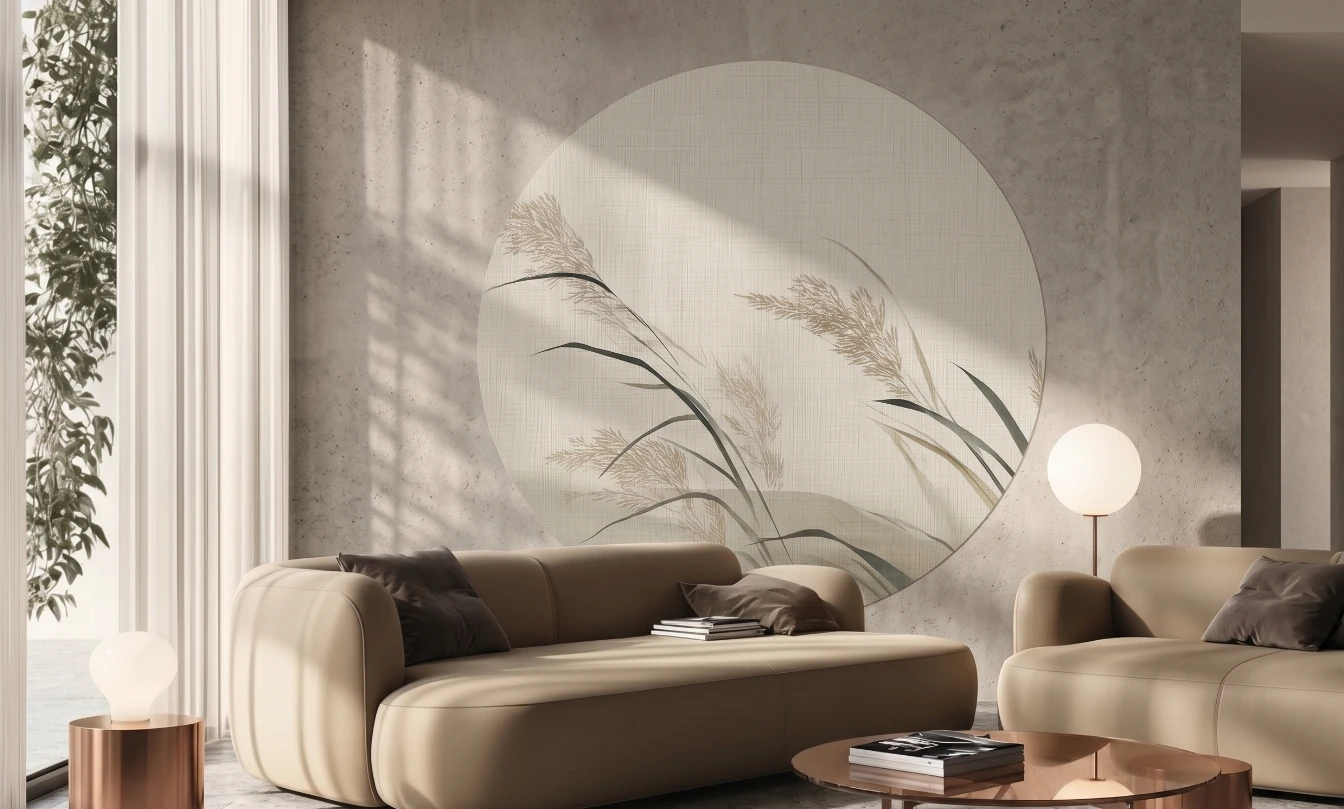
Circle Wall Wallpapers – How to Use Them in Interior Design?
Circle wall wallpapers are graphics cut into a regular, closed shape. In the RÊVE offer, this variant is called Cercle and is made exclusively on a self-adhesive Colle backing. Three diameters are available: 50, 75, and 100 cm.
The circle does not replace a classic mural covering the entire wall. It serves a different function. It focuses the eye in one spot, defines a compositional point, and allows the graphic to be combined with the wall color. Thanks to its clear edge, it works similarly to a large painting but does not require a frame.
This format can be placed above a bed, sofa, desk, or dresser. It also works well in the hallway, near a mirror, and in a photo gallery. It is important to maintain the relationship between the decoration and the furnishings. The circle should not look like a randomly stuck element. Its center, edge, and distance from furniture create a unified arrangement with the wall.
Which Size of Circle Wallpaper to Choose?
The diameter is selected according to the scale of the wall, the width of the furniture, and the viewing distance of the decoration. RÊVE offers circles with diameters of 50, 75, and 100 cm, so the choice does not require specifying individual dimensions.
The 50 cm circle acts as a smaller accent. It can be used above a desk, next to a mirror, near a small dresser, or as part of a larger wall gallery. This size leaves a lot of empty space, so it works well in places where the graphic should not dominate other elements.
The 75 cm diameter creates a more distinct compositional point. It fits above a cabinet, console, hallway bench, or smaller bed. It can also fill a free wall section between furniture.
The 100 cm circle becomes the main element of the arrangement. It can be placed above a sofa, bed, or wide dresser. At this diameter, the amount of empty wall around the graphic is more important. Too small a gap from the ceiling, corner, or edge of furniture weakens the readability of the round form.
Before ordering, it is worth marking the planned outline with painter's tape. This allows you to assess the actual scale of the decoration without relying solely on the dimension given in the configurator.
How to Choose the Frame and Pattern for the Circle Shape?
The round format shows only a selected fragment of the graphic. Therefore, not only the motif itself but also its placement inside the circle matters. In the RÊVE configurator, you can change the pattern scale, set the frame, and apply horizontal or vertical mirror reflection. Saturation, hue, and brightness adjustments are also available.
For botanical patterns, the frame can highlight individual leaves, flowers, or branch fragments. In abstract graphics, the arrangement of spots, lines, and color transitions becomes more important. Geometric motifs require control of axes and repetition because the circle's edge may cut the pattern's rhythm in a visible place.
Enlarging the graphic changes the perception of the entire decoration. Large elements create a calmer, more decisive composition. A small pattern introduces more details and attracts the eye more strongly from a close distance. At 50 cm diameter, an overly complex frame may become hard to read. At 100 cm diameter, the same motif has more space.
The color of the circle should be matched with the wall surface. The graphic can strongly contrast with the background or repeat one of its shades. The first arrangement emphasizes the decoration's boundary more. The second gives a calmer effect and better integrates the circle with the entire interior composition.
Where to Place the Circle Wallpaper?
The placement of the circle depends on the wall layout and the elements near it. Above a sofa or bed, the decoration can be centered relative to the furniture. However, this does not automatically mean placing it in the middle of the entire wall. The axis of the composition in this case is the furniture, not the room's surface.
At a desk, the circle can be above the tabletop or slightly shifted to the side. An asymmetrical arrangement works well when there are shelves, a lamp, or a vertical cabinet on the other side. In the hallway, the decoration can be combined with a console, seat, or coat rack.
The circle wallpaper also works well with a mirror. Two round elements do not have to be the same diameter or at the same height. A larger graphic and a smaller mirror create a clearer hierarchy. You can also pair a regular circle with a rectangular or irregularly edged mirror.
In a photo gallery, the circle serves as the largest element. Frames can be arranged densely around it or with larger gaps. A dense arrangement builds a complex composition, so the graphic should have a calmer frame. With 2–4 frames, the circle can be more contrasting and act as the main focal point of the wall.
How to Install Circle Wallpaper on Colle Backing?
RÊVE circles are made exclusively on Colle backing, a self-adhesive material. Installation does not require separate glue. However, the wall must be properly prepared because the substrate condition affects adhesion and the graphic's appearance.
The surface should be smooth, clean, dry, degreased, and free of dust and loose paint fragments. Small irregularities may remain visible under the material, especially with light falling parallel to the wall.
Before sticking, it is worth marking the vertical, horizontal, and center of the circle. The decoration is applied gradually, revealing successive parts of the protective layer. Pressing from the center toward the edge helps reduce air bubbles and graphic shifting.
Before ordering, you can use the configurator, save the selected frame, and check how the pattern looks after changing scale, brightness, or saturation. An available sample additionally allows you to assess the color, detail, and graphic fragment at a 1:1 scale. This is especially important when the circle is next to paint, fabrics, wood, or other materials with a specific shade.
Circle wallpaper works best as a planned part of the wall, not as a standalone addition placed without reference to furnishings. Choosing the diameter, frame, and axis allows you to connect the graphic with the interior architecture and maintain proper proportions of the entire composition.
